
The Correlation between Personality and Relationships with Pets
Maia Paluska
Abstract
The research was conducted to determine if personality affects individuals' relationships with pets. Undergraduate college students at a small midwestern campus participated in the survey. The researcher passed out objective, self-reported surveys to classes at the campus, making sure to include students of all ages in the sample. The survey included questions about owning pets and ideal pet choice, in addition to scales of happiness, introversion/extraversion, and androgyny. The results indicate that happier and more extroverted people preferred dogs over cats
(significance = .014, .004). The results did not significantly support the hypothesized link between wanting to own a pet and stereotyped feminine characteristics and androgyny and choice of pets. The implications of the research point to the popularity of pet ownership and individuals owning pets to increase happiness. More research into androgyny, liking pets, and pet preference may indicate different results.
Keywords: personality, pets, attitudes
Because an estimated 62% of households in the U.S. (about 72.9 million) own a pet, researching the topic of pet/human relationships and the implications of these relationships is a worthwhile endeavor (American Pet Products Association, 2011). By studying the correlation between personalities and relationships with pets, there is an opportunity to learn a great deal more about how personality affects various other aspects of human life and even to draw conclusions about future behavior. The pet/human bond, while commonly esteemed, has been somewhat neglected in the psychological community, and more research into this topic would surely provide interesting basic research, in addition to useful, applied research. The current research examines several factors connected to personality and relationships with pets.
The ideas of happiness, personality, specifically introversion/extraversion, and androgyny have been the focus of much research, which has been utilized in the current research. In particular, popular culture has valued happiness and attached a stigma to depression or a lack of happiness (Monteith & Pettit, 2011). Happiness is so esteemed in western culture that the idea that individuals can increase their own happiness has been popularized through concepts like Dr. Martin Seligman's Positive Psychology. Positive psychology emphasizes the importance of rejecting negative thoughts in order to highlight positive emotions and character strengths, thus enhancing well-being (Authentic Happiness, 2006).
Similarly, personality traits like introversion and extraversion carry various cultural ideas. A common, but scarcely researched and supported notion is that people who exhibit extroverted traits prefer dogs, and those who exhibit introverted traits prefer cats (Gosling, Sandy, & Potter, 2010). The current research seeks to support this concept.
Sandra Bem increased knowledge of the concept of androgyny, or having both masculine and feminine characteristics, through the Bem Sex-Role Inventory, or the version used in the current research, the Stanford Androgynous Personality Test (Oswald, 2004). The inventory utilizes self-reporting on gender roles and seeks to identify individuals' masculine, feminine, and androgynous personality traits. Additionally, Lefkowitz and Zeldow examined the relationship between androgyny and mental health. Individuals with androgynous characteristics are expected to be more mentally healthy than stereotypically masculine or feminine individuals, and their findings support this idea (Lefkowitz, & Zeldow, 2006). Because the concepts of happiness, introversion/extraversion, and androgyny have been widely researched, the researcher hypothesized that these concepts would provide a relevant theoretical basis for research into individuals' relationships with pets.
The current research relies on the work of others in order to find correlations between happiness, introversion/extraversion, androgyny and relationships with pets. Three scales were adapted to quantify personality traits of the participants. The scales used are the Subjective Happiness Scale, The Big 5 Inventory, and the Stanford Androgynous Personality Test (Lyubomirsky & Lepper, 1999; John & Srivastava, 1999).
Lyubomirsky and Lepper (1999) discuss preliminary reliability and construct validation for the Subjective Happiness Scale, which was utilized as a measure of happiness for the current research. The 4 item scale tested the subjective happiness of 2732 participants, aged high school, college, and older adulthood in the United States and Russia over the course of 14 studies (Lyubomirsky & Lepper, 1999). Also, in the corresponding research to the Big 5 Inventory, the authors discuss the Big Five Personality traits. The authors point out various positive and negative aspects of the Big Five, such as the positive that it is easy for most everyone to understand, but the detriment that it so deeply rooted in vernacular language. The Big Five Inventory is also included in the work, which contains introversion/extroversion questions included in the current survey (John & Srivastava, 1999). Finally, Sandra Bem developed the Stanford Androgynous Personality Test. The inventory utilized in the current research, like the Bem Sex-Role Inventory, consists of self-reported scales pertaining to individuals' masculine, feminine, and androgynous personality traits (Oswald, 2004).
Personality, Attachment, and Pets
It is worthwhile to review previous research into the topics of attachment and personality and how these concepts relate to pet ownership, since 62% of U.S. households own pets (American Pet Products Association, 2011). Individuals that prefer dogs over cats are considered to be more extraverted than those who prefer cats over dogs, and research has been done to discuss this notion. Numerous studies have examined the subjects of pet attachment and personality and have been valuable to the researcher's understanding of the basis for the current research.
Kurdek (2008) researched the level of attachment that individuals felt towards their dogs and compared this attachment to human relationships as well. Another goal of the research was to identify the characteristics of individuals that were highly attached to their pet dog. The sample used in this study was 923 college students. Noteworthy findings from this research include that owners that scored high in openness and dogs that scored high in energy and intelligence led to greater attachment among dogs and owners (Kurdek, 2008).
Additionally, El-Alayli, Lystad, Webb, Hollingsworth, and Ciolli (2006) evaluated how pet owners rate their pets' personalities compared to the 'average' pet. The ratings of the pets' personalities were then assessed according to how attached the owners were to their pets. Not surprisingly, pet owners who rated their pet's personalities very favorably compared to 'average' pets were highly attached to their animals. The authors referred to this phenomenon as 'pet enhancement bias.' Most participants chose to evaluate pet dogs, while cats were the second most popular pet, and other pets like hamsters and birds were also included in the research (El-Alayli, et. al., 2006).
College students at Cameron University sought to evaluate the personality correlations between college students and their cats. In order to determine this, the researchers had the cat owners report on their cats' personalities and self-report their own personality traits. The study also compared the personality traits of Siamese and mixed breed cats. The researchers found positive correlations between Siamese and mixed breed cats and their respective owners. According to the authors, this research is the first to compare cat personality traits based on the cats' breed (Weinstein & Alexander, 2010).
Bauer and Woodward (2007) also discussed the compatibility of individuals with their pets. To do this, the researchers surveyed 266 pet owners (89 cat owners and 177 dog owners) to determine differences between people who prefer dogs and people who prefer cats. Some noteworthy results of the study were that people who shared personality traits with their pets were more attached to the pets, and that cat owners were more hostile in their orientation than dog owners (Bauer & Woodward, 2007.)
Data from Gosling, Sandy, and Potter (2010) at the University of Texas at Austin, indicates clear personality differences between individuals that favor dogs and those that favor cats. Some noteworthy points from this research include that 'dog' people are more extroverted, conscientious, and agreeable than 'cat' people, while 'cat' people are more neurotic and open than individuals that favor dogs. The research was carried out with 4565 volunteers, who identified whether they favored cats, dogs, or both, and then these volunteers were assessed on a Big Five Personality Inventory. Also worth noting, more people identified as 'dog' people than 'cat' people (Gosling, et. al., 2010).
Happiness, Well-being, and Pets
Psychological research studies that involve pets often examine how pets affect happiness and/or wellbeing. These studies have focused on the effects of pets on various participants such as 'normal' people, psychiatric patients, and elderly individuals. Often, the results of these research studies indicate that pets positively impact health and well-being (Serpell, 1991, McConnell, Brown, Shoda, Stayton, & Martin, 2011).
A key study relating to happiness, pets, and the current research was carried out by McConell and others. The primary focus of this publication was to discuss the positive effects of owning pets, which the authors determined after executing three studies on the topic. The work determined that although all pets, specifically dog owners, have better psychological well-being, the extent to which the dogs fill social needs determines how much better off the owners wellbeing is. Another important point made in the work is that pets provide beneficial social interaction unrelated to human support, whether human support is plentiful or lacking: pet support complements, not competes with, other social support. In short, there were numerous psychological and health benefits to 'everyday' pet owners (McConnell, et. al., 2011).
Additionally, Serpell's 1991 research indicated that owning pets has positive effects on human health and wellbeing. Two groups of adults acquired a new pet (either a cat or dog), while a control group did not acquire a new pet, and the behavior of the three groups was studied over a ten month period. Interestingly, during the first month of ownership, both groups owning pets reported less minor health problems, and dog owners continued to reap this benefit across the entire ten month research period. The control group, without pets, had no statistically significant changes to their health or well-being, while the other two groups, especially the dog owning group, did benefit from owning pets (Serpell, 1991).
Another noteworthy study was carried out in 2010 by Mindlab International on behalf of the United Kingdom dog food brand Winalot. Across the U.K., 1000 dog owners were surveyed on their relationship with their dogs, and the study produced several relevant statistics dealing with the positive effects of spending time with one's dog. After spending time with the family dog, 55% of these dogs' owners 'felt more relaxed and less stressed,' and 44% of the participants 'felt happier and more optimistic. In short, the study indicated that spending time with one's dog leads to reduced stress levels and increased happiness. In addition, the research discussed other aspects of how people relate to and interact with their dogs (Dogs Proven as Effective Stress Relievers, 2010).
In another study, Barker and Dawson (1998) aimed to determine if trained animal-assisted therapy played a role in the anxiety of hospitalized psychiatric patients, and if less anxiety affected patients' diagnoses. To do this, the researchers compared the results of a self-reported anxiety scale after patients had received animal-assisted therapy and traditional therapy. The researchers found that animal-assisted therapy reduced anxiety levels for hospitalized patients with various psychological disorders, but traditional therapy only reduced anxiety levels for those hospitalized with mood disorders (Barker & Dawson, 1998).
Although studies concerning pets generally indicate that pets improve happiness and well-being, not all research has reached these conclusions. For example, Kaiser, Keilman, McGavin, Spence, and Struble (2002) sought to determine if elderly nursing home residents preferred a dog or human visitor. The dog visitor was a certified therapy dog, while the human visitor was an enthusiastic young adult. The small sample size of six indicated that the residents enjoyed the visits equally. Only five of the participants completed the post visit interview, and of these five residents, three liked the visits equally, while one person preferred the dog, and one person preferred being visited by the 'happy' person (Kaiser, et. al., 2002).
Also not aligning with the general notion and current hypothesis that pets improve happiness levels is the study by Johnson and Rule (1991) examining personality characteristics, especially those indicating or related to self-esteem in pet owners and non-owners. High self-esteem is an indicator of general happiness, which makes this study relevant to the topic of happiness and pets. The authors tested 82 pet owners and 48 non-pet owners in this survey and paid special attention to the personality characteristics of pet owners highly attached to their pets. The findings did not indicate considerable differences in the self-esteem levels of the two groups, but did suggest that pet and non-pet owners may have different 'attitude based relevant values' (Johnson & Rule, 1991).
Androgyny and Pets
The concept of androgyny, or sharing masculine and feminine personality traits, interacts with other aspects of personality. Thus, the researcher expects that masculinity, femininity, and androgyny play a role in relationships with pets, specifically in having/liking animals and pet choice. Research that has been conducted on the topic of gender and pets has focused on gender differences in interacting with pets, gender differences in pet choice, and links between domestic violence and animal abuse (Fallani, Prato-Previde, & Valsecchi, 2006, Edelson, Lester, 1983, Gupta, 2008).
Fallani, Prato-Previde, and Valsechhi (2006) conducted an observational study in order to determine if men and women exhibited differences in the ways that they interacted with their pets. In order to research this, they arranged a modified version of Ainsworth's Strange Situation with pets and pet owners. The participants included 15 women and 10 men, and the researchers recorded the interactions between the participants and their pets. The research included rating the play and affiliative behavior of the owners along with a questionnaire seeking to judge attachment between pet and owner. Noteworthy results from the research include that women used 'motherese' when talking to their pets and were more verbal to the pets, whereas men and women played, showed affiliative behavior, and indicated attachment similarly. While this research does not support the current research hypothesis that those who have or like animals are more likely to exhibit stereotypically female characteristics, it is worth noting that this research indicated a gender difference in verbal communication (Fallani, Prato-Previde, and Valsechhi, 2006).
In other research, Edelson and Lester (1983) also found gender differences in their research into the topic of pet ownership and relationships. The research participants included 55 female and 36 male college students, and the researchers compared the students' self-reported introversion/extraversion scores on the Eysenck Personality Inventory with their hypothetical pet choice. This research was especially useful to the current research, as it too explored gender and introversion/extraversion. Concerning gender, Edelson and Lester found that women were more likely than men to own a cat. In males only, extraversion was linked to preferring dogs as pets (Edelson & Lester, 1983).
In especially noteworthy research Ramirez (2006) interviewed 26 participants, who were also dog owners. This research supports the current hypothesis that personality, specifically masculinity, femininity, and androgyny plays a role in relationships with pets. The research sought to consider how gender norms affect relationships with pets. The participants in this research were found to apply gender norms in choosing dogs to own, discussing their dog's personality, and vicariously displaying their own personalities through their dogs (Ramirez, 2006).
Because domestic abuse and animal abuse commonly occur together, Gupta (2008) sought to learn if functional links between domestic violence and animal abuse existed. Aggression is a stereotypically masculine trait, so this research provides useful information to the researcher in order to find possible gender differences in relating to pets. Gupta's results suggested that intimate partner violence and animal abuse are connected, and that gender differences exist in the abuse. Emotional callousness in men was linked to domestic violence and animal abuse, while for females, projection-sensitivity predicted domestic violence and animal abuse (Gupta, 2008). While the current research focuses on attachment rather than abuse, gender differences in animal abuse suggest that masculinity, femininity, and androgyny may indicate differences in relationships with pets.
Although some research does indicate gender differences in relationships with pets, not all research reveals significant gender differences on this topic. In a literature review of the broad topic of gender differences in human and animal interactions, Herzog found mixed reviews of how gender affects our relations with animals (2007). Herzog's findings support the current research's hypothesis that women typically display more positive relationships with animals than men. Some of the topics reviewed that led to this finding include the two genders' levels of attachment to animals and attitudes toward activities like hunting, and animal protection. Herzog's literature review findings indicate that in general, men and women's attitudes towards animals overlap more than these attitudes significantly differ (Herzog, 2007).
Research Thesis
The current research problem examines several factors relating to personality and relationships with pets. These factors include androgyny's relationship to pet treatment and pet choice, sex of pet owner and sex of pet, happiness and pet ownership, and introversion/extraversion personality characteristics and pet preference. The research aspects of androgyny, happiness, and introversion/extraversion are evaluated on the Stanford Androgynous Personality Test, Subjective Happiness Scale, and Big 5 Inventory, respectively.
Based on the popular ideas of pets and personality, which was reinforced by the psychological literature on the topic, the researcher formed several hypotheses. Primarily, personality is related to choice of pets. In this hypothesis, the independent variable is personality, and the dependent variable is choice of pets. This outcome is expected because owning pets is a considerable undertaking in which personality is likely to influence one's choice.
Another expected outcome of the current research is that if one has/likes animals, he or she is likely to exhibit stereotyped female characteristics on the Stanford Androgynous Personality Test, in which the independent variable is stereotyped female or male characteristics exhibited on the Stanford Androgynous Scale, and the dependent variable is having/liking animals. This conclusion is expected because of the caretaking reputation of women.
Next, the researcher hypothesized that one chooses a pet that is the same sex as he or she. In this hypothesis, the independent variable is the individual's sex, and the dependent variable is the sex of the individual's pet. This result is expected based solely on observation of pets and owners, so the statistical quantification of this hypothesis will be of interest to the researcher.
Another hypothesis the researcher examined is that animals as pets positively affect their owners' overall happiness, as indicated by their scores on the Subjective Happiness Scale (1999). In this hypothesis, the independent variable is whether or not individuals own animals as pets, and the dependent variable is the individuals' overall happiness exhibited on the Subject Happiness Scale. This hypothesis was formed based on popular opinion and literature showing correlation between owning pets and mood enhancement (Serpell, 1991 & McConnell, et. al, 2011).
The current research hypothesized that individuals that choose or would choose to own dogs exhibit extraverted characteristics, and individuals that choose or would choose to own cats exhibit introverted characteristics, according to Drs. P. John and Sanjay Srivastava's Big 5 Inventory. In this hypothesis, the independent variable is introversion/extraversion personality characteristics, and the dependent variable is preference to cats/dogs. This hypothesis was formed based on public opinion and research indicating personality differences between people who prefer cats and those that prefer dogs (Gosling et al., 2010, Baurer & Woodward, 2007).
Lastly, the researcher also hypothesized that individuals that choose or would choose to own stereotypically masculine or feminine dogs are likely to exhibit stereotyped masculine or feminine characteristics based on the Stanford Androgynous Personality Test, while individuals scoring high on this scale for androgyny are likely to prefer gender neutral dogs. Sex typed traits and behaviors remain common in popular culture, so the researcher presumed that pet ownership behavior would mimic this phenomenon.
Method
Participants
The participants were selected through a convenience sample at a small midwestern university. They were enrolled in classes in sociology, psychology, and education (both undergraduate and graduate courses in education). Students were also surveyed in a computer lab. Participants were given an option to decline to take part in the research. The sample was made up of 71 women and 33 men, for a total of 104 participants. The participants were asked to self-report their age on one of two scales (18-23 years old and 24+ years old). The majority of the students fell into the 18-23 range, and 22.1% of the participants reporting an age fell into the 24+ age range. Most of the participants are completing their undergraduate degree, and the remaining 10.6% of students reporting a grade level are graduate students. The most prevalent reported grade level of the participants was sophomore year in college. The current research was approved by the McKendree University Institutional Review Board and was conducted according to the American Psychological Association ethical guidelines (American Psychological Association, 2010).
Materials
Modified versions of The Subjective Happiness Scale (Lyubomirsky & Lepper, 1999), The Big 5 Inventory (John & Srivastava, 1999), and the Stanford Androgynous Personality Test were used. The survey questions inquired about pets (current, past, and future) and pet choice, along with questions from the modified versions of previously published material that focused on happiness, introversion/extraversion, and androgyny.
Procedure
The researcher formed hypotheses based on observations and popular culture indicators, and reviewed literature pertaining to pets and personality in order to determine if the hypotheses had been supported elsewhere. The review of literature also provided relevant background information relating to pets, happiness, introversion/extraversion, and androgyny. Next, the researcher adapted the scales of The Subjective Happiness Scale, The Big 5 Inventory, and the Stanford Androgyny Personality Test to be included in the survey. The adaptations consisted of applying a consistent 7 point Likert scale to the three scales. The researcher then formulated survey questions that would indicate participants' relationships with pets and choice of pets, from which correlations to happiness, introversion/extraversion, and androgyny could be measured. After the survey was completed, it was field tested in the researcher's Experimental Psychology and Research Methods course, where minor revisions were suggested and ultimately made. After finalizing the survey, the researcher sent the research to the McKendree University Institutional Review Board, where it was deemed exempt from review. The researcher then distributed the survey to 100 participants at a small midwestern university. After collecting the 100 surveys, the researcher inputted the data and ran statistical tests, including descriptive statistics, frequencies, correlations, and ANOVAs.
Results
The current research data indicated that, in many instances, personality is related to individuals' relationships with pets. Most participants (79.8%) owned pets and also indicated high general happiness. Further, the measure used to judge if individuals liked pets, ('Would you want a pet?') indicated that the participants strongly agreed to wanting a pet (72.1%).
A median split was used to judge participants' responses as high masculine (greater than 50 total score, and less than 60 feminine score) high feminine (greater than 60 feminine score and less than 50 masculine total), and high androgyny (high or low on both masculinity and femininity). Data from a one way ANOVA indicated that almost all respondents wanted a pet,
regardless of scores on the Stanford Androgynous Personality Test.


Although nonsignificant, the data indicated that individuals hope to own a male pet more often than a female pet, regardless of the participant's gender.

Because participants indicated high happiness levels and high levels of owning and wanting to own a pet, no significant results were found concerning pets positively affecting their owners' overall happiness. Introversion and extroversion levels also did not play a role in wanting a pet. However, a one way ANOVA did indicate that happier people preferred dogs over cats. This ANOVA also indicated that more extroverted people preferred dogs over cats.


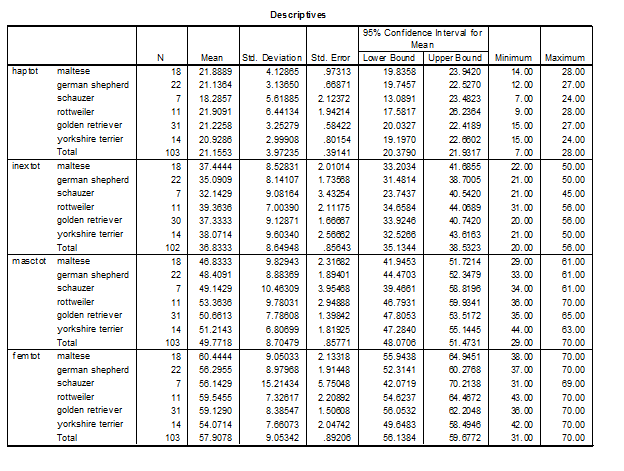
Although nonsignificant, a one way ANOVA indicated that individuals with high masculine scores preferred rottweilers, and individuals with high feminine scores preferred malteses. Also, the nonsignificant data indicated that happier and more extroverted people preferred rotweillers. Other interesting findings from the research include that far more participants preferred to own a dog over a cat (80.8%). Also, golden retrievers were found to be the most popular dog to be owned among participants (35 participants' choice. Conversely, schnauzers were the least popular dog to own among participants (7 participants' choice).

Discussion
The present research resulted in numerous interesting and applicable results, reinforcing common ideas and previous research on the topic of personality and pets, as well as investigating original ideas. However, due to the nature of the research experience, limitations exist. A factor that may have influenced the results of the research is that the sample size of 104 participants may not have been large enough to adequately or validly gauge the research hypotheses.
The small sample size was also limited to college students. Although the researcher made certain to include non-traditional students in the sample, the majority of students participating in the research were of traditional college age (18-23). Because of the age range of the majority of participants, the individuals in this age group may not have their own pet. Thus, many participants probably referred to their family pet when responding to the survey, which may have skewed the amount of individuals that owned pets to a higher number.
Additionally, more women than men took part in the research. Since the number of participants was not equally divided by sex, women are more represented. Ideally, the present research would be conducted with an equal split of men and women, especially since the data relies on reports of masculine and feminine characteristics.
Another factor that impacted the results of the research was that not all participants fully completed the survey. Thus, the statistical tests were not all carried out with the full participant sample. Had all the responses been completed, response bias would have been controlled. Although a contributing factor to incomplete surveys was likely fatigue on the part of the participants, some participants may have found the directions confusing. While field testing the survey, numerous ideas on how to improve the survey were discussed. Although most of these suggestions were helpful to the present research, perhaps over-analysis of the survey layout and directions actually resulted in less 'user-friendly' survey.
The survey participants reported, on average, high levels of happiness. While the researcher was encouraged by the high happiness reports of the campus, the high happiness levels may have limited the correlations being explored. Had more variance existed in the reports of happiness, results may have differed. Additionally, the high happiness levels of college students leads to the questions of whether the self-reported scores were inflated by the respondent or if college students are really very happy individuals. Possibly, older participants with more 'real world' responsibility would have reported lower happiness levels, which would have affected the results of the research.
The survey item relating to choice of dog breeds contained six options, which in retrospect, may have provided too many choices for the participants. The survey question contained two stereotypically masculine dogs (Rottweiler and German shepherd), two stereotypically feminine dogs (Yorkshire terrier and Maltese), and two 'androgynous' dogs (schnauzer and golden retriever). Had the survey item only included one of each style of dog, the results may have been more valid. In the current research, individuals may have been more likely to choose to own a breed of dog that they have a personal connection to. For example, if an individual's family has always owned Rottweiler dogs, even if this individual indicated high stereotypically feminine scores, he/she would be likely to choose to own a Rottweiler. If a German shepherd was the only 'masculine' dog, the individual may have been more likely to choose to own a different dog. Although personal bias toward particular breeds of dogs is inevitable, had individuals' breed choices been limited, the results would probably have more validly indicated how perception of gender roles in dog breeds impacted their choice.
Moreover, had less popular, but equally 'gendered' dogs been listed as choices of dog breeds, individuals may have had less personal attachment to the dog breeds. Thus, their responses may have more accurately indicated their feelings on gender and dog breeds. It would also be interesting to replicate the survey with different pictures of the dog breeds, such as gentler or angrier images, to see if such factors impact breed choice.
The current research explored the conceptual hypothesis that personality relates to relationships with pets, including choice of pets. The present research also hypothesized that if one has/likes animals, he or she is likely to exhibit stereotyped female characteristics on the Stanford Androgynous Personality Test. The data did not indicate that those who exhibit stereotypical female personality traits were more likely to want to own pets. The basis for this hypothesis was that female characteristics exist in individuals that possess maternal instincts.
The rejection of the hypothesis that highly feminine individuals would be more likely than androgynous or highly masculine individuals to want to own pets may have resulted from of a lack of validity in the survey items relating to gender. The Stanford Androgynous Personality Test survey items may not use wording that appropriately judges androgyny by present standards. For example, college women today are likely to report that they are independent, which is judged by the Stanford Androgynous Personality Test to be a masculine trait. Perhaps ideas like independence or ambition do not signify masculinity to women like the participants in the current research.
However, the data indicated that men reported significantly higher totals for masculine survey items, but women did not report significantly higher feminine totals. Women were likely to rate themselves highly on certain masculine survey items, such as independence, ambition, or even competitiveness. However, for overtly masculine survey items, women seemed to balk at describing themselves as dominant, aggressive, or forceful, but men were more likely to report highly for items like these. Although not all men reported highly for these obvious masculine terms (even with men, these items appeared to carry a stigma of some sort), because men ranked themselves higher for all masculine traits, and the results indicated significantly higher masculine totals.
Perhaps the Stanford Androgynous Personality test does in fact still validly gauge androgyny. At least to some extent, the results of the current research support the societal trend that women and men are indicating more similar traits. Although women were less likely to highly rate themselves for overtly masculine traits, men did not seem to hesitate to rate themselves highly for feminine items like being loving towards children or compassionate. In fact, the majority of respondents' scores (44) placed them into the category of 'androgynous,' rather than 'highly masculine' or 'highly feminine.' Not surprisingly because the majority of participants were women, there were 34 participants who fell into the highly feminine category versus 19 highly masculine participants. Still, the implications that the majority of participants of the current research are androgynous was encouraging. Androgynous individuals are considered to be more mentally healthy than their highly masculine or highly feminine counterparts.
In a broader sense, the high levels of androgyny indicated by the participants of the current research could possibly be applied to the college population at large. Mostly college age women took part in the research, so it would be valid to hypothesize that other college age women would report similarly. Of course, the male respondents self-reported androgyny levels could be generalized as well, but perhaps not as confidently, considering that fewer men than women took part in the research. It would be interesting to replicate the study with college age participants in different parts of the United States or even globally. The midwest is commonly considered to be more conservative than the coasts, so college students in other parts of the country may report higher levels of androgyny than the midwestern participants in the current research. Perhaps, with differing gender attitudes and norms globally, the results of the study concerning androgyny may differ. (All the results of the research might differ nationally and globally).
It would also be interesting to compare college age participants' androgyny levels with that of an older population. Older individuals may adhere more strongly to traditional gender roles. Other factors that may have contributed to the current research participants' high androgyny levels are educational level, socioeconomic status, and the fact that college students are less likely to have started their own families. Perhaps acting in the role of mother or father may strengthen gender norms.
Another hypothesis of the current research was that individuals will likely choose to own a pet that is the same sex as he or she. Although the results were not significant, the data indicated that individuals hope to own male pets more often than they hope to own female pets, thus rejecting the hypothesis. The researcher was surprised by this result, but after speaking with others, the complication of female pets having offspring was raised. Despite the societal emphasis on spay and neuter programs, perhaps individuals are still hesitant to take on the responsibility of pet offspring. Or, perhaps the indication that more people prefer to own male versus female pets is simply an extension of the patriarchal western society.
The current research also hypothesized that animals as pets positively affect their owners' overall happiness, as indicated by their scores on the Subjective Happiness Scale. However, because the date indicated that almost all participants owned and wanted to own a pet and possessed high levels of happiness, no significant results regarding pets positively affecting owners' happiness was indicated. Introversion and extroversion levels also did not play a role in whether an individual wanted to own a pet. Because the date did not indicate that gender roles, happiness, or introversion/extraversion played a role in wanting to own a pet, it can be surmised that almost everyone enjoys pets.
American culture emphasizes pet ownership, and individuals are likely to want to own pets for companionship, as well as the common notion (supported by previous research) that pets do positively impact their owners' lives. In fact, a participant wrote in the survey margin 'I will always want a pet,' in response to the survey item 'If you would never want a pet, why not?' This commitment to pet ownership embodies the United States' cultural focus on pet ownership.
Another interesting research question that was raised throughout the experience was that perhaps because the perceived benefits of pet ownership are widely recognized, unhappy people may actually choose not to own a pet. Possibly, individuals that suffer from depression or are simply irritable are not psychologically prepared to or do not want to make a proactive decision to increase their happiness levels. Although this is a nascent research idea needing further development, it may be worthwhile to research on a larger scale the personalities of individuals that choose not to own pets and further analyze these individuals' reasoning.
The current research also hypothesized that individuals that choose or would choose to own dogs exhibit extraverted characteristics, and individuals that choose or would choose to own cats exhibit introverted characteristics, according to the Big 5 Inventory. The research findings did indicate that more extroverted individuals preferred dogs to cats. Moreover, the findings indicated that happier people also prefer dogs to cats. Although 'dog' and 'cat' people are societally expected to be different, the current research is significant because few research studies have actually resulted in data supporting common stereotypes. American society tends to favor extraversion over introversion, which may partially explain why both happier and more extroverted individuals prefer dogs to cats. Simply, extroversion and happiness are traits that are correlated in individuals.
An explanation as to why happy, extroverted individuals favor dogs is somewhat common sense considering the nature of dogs and cats and the activities that one takes part in with each type of pet. Dogs require their owners to come outside their home in order to handle elimination, unlike cats. Further, dogs and their owners are essentially expected to take walks and visit parks together, including 'dog parks.' Each time a dog owner leaves the house with their pet, the owner is likely to meet others, whether in passing or in planned outings with other dog owners, as dogs are simply more engaged in the greater community. In short, one might ask 'Who would bring their cat to Petsmart?' although this is a common practice among dog owners. Dogs are also stereotypically more absorbed in and excited by their owners, which most likely boosts the moods of dog owners. The stereotype of a sad old dog owner is simply not a popular notion, as it is with cat owners. Although when put on paper, the perceived benefits of dog ownership (as the researcher herself does in fact own a dog), appear biased, these ideas are simply cultural norms that happened to play out in the current research.
Additionally, the current research indicated that dogs are more popular than cats, as far more participants (82.4%) indicated that if they had to choose to own either a cat or a dog, they would choose a dog. Further, when participants were given the option to write in a kind of pet other than cat or dog that he/she owned and felt closest (if they had more than one pet), few participants indicated another choice of pet.
The final research hypothesis explored in the current research was that individuals that choose or would choose to own stereotypically masculine or feminine dogs are likely to exhibit stereotyped masculine or feminine characteristics based on the Stanford Androgynous Personality Test, while individuals scoring high on this scale for androgyny are likely to prefer gender neutral dogs. Although not statistically significant, highly masculine individuals preferred Rottweiler dogs and highly feminine individuals preferred Maltese dogs (as expected). Although this data was not significant, the results were in the direction predicted for the research thesis. These results may be precipitated from societally reinforced gender norms. Interestingly, nonsignificant data also indicated that happier and more extroverted individuals also preferred Rottweiler dogs, perhaps because these large dogs would be ideal for active individuals likely to be extroverted and happier. However, because the number of individuals favoring each breed of dog led to a fairly even distribution among dog breeds, personal attachment to particular dog breeds no doubt influenced the results.
The research experience led to a greater understanding of the topic of personality and pets and raised further research problems to be explored in future studies. For example, is it likely that highly feminine individuals choose stereotypically masculine versus feminine dogs for security purposes rather than because of perceived similarity to the pet? Also, why are golden retrievers so popular, as this research, as well as societal trends (for instance, appearances in numerous children's movies) indicate? How would a broader sample of participants affect the results of the current research? If most individuals hope to own pets, how do the levels of attachment to their pets differ? Questions like these will be addressed in future research, but the current research has added thought provoking information to the body of knowledge relating to personality and pets.
References
(2010). Publication manual of the american psychological association. (6 ed., p. 20). Washington, D.C.: American Psychological Association.
American pet products association. (2011).
Authentic happiness. (2006). Retrieved from http://www.authentichappiness.sas.upenn.edu/Default.aspx
Barker , S. B., & Dawson, K.S. (1998). The effects of animal-assisted therapy on anxiety ratings of hospitalized psychiatric patients. Psychiatric Services, 49, 787-791.
Bauer, A. L., & Woodward, L. E. (2007). People and their pets: a relational perspective on interpersonal complementarity and attachment in companion animal owners. Journal of Human-Animal Studies, 15, 169-189.doi: 10.1163/156853007X187117
Dogs proven as effective stress relievers. (2010, August 11).
Edelson, J., & Lester, D. (1983). Personality and pet ownership: A preliminary study. Psychological Reports, 53(3, Pt 1).
El-Alayli, A., Lystad, A. L., Webb, S. R., Hollingsworth, S. L., & Ciolli, J. L. (2006). Reigning cats and dogs: a pet enhancement bias and its link to pet attachment, pet self-similarity, self-enhancement, and well-being. Basic and Applied Social Psychology, 28(2), 131-143.doi: 10.1207/s15324834basp2802_3
Fallani, G., Prato-Previde, E., & Valsecchi, P. (2006). Gender differences in owners interacting with pet dogs: an observational study. Ethology, 112(1), 64-73.doi: 10.1111/j.1439-0310.2006.01123.x.
Gosling, S. D., Sandy, C. J., & Potter, J. (2010). Personalities of self-identified 'dog people' and 'cat people.'. Anthrozo's, 23(3), 213-222. doi:10.2752/175303710X12750451258850
Gupta, M. (2008 ). Functional links between intimate partner violence and animal abuse: personality features and representations of aggression. Journal of Human-Animal Studies, 16, 223-242. doi: 10.1163/156853008X323385
Herzog, H. A. (2007). Gender differences in human-animal interactions: A review. Anthrozo's, 20(1), 7-21. doi:10.2752/089279307780216687
John, O. P., & Srivastava, S. (1999). The big-five trait taxonomy: history, measurement, and theoretical perspectives. Manuscript submitted for publication, Department of Psychology, University of Oregon, Eugene, Oregon. Retrieved from http://pages.uoregon.edu/sanjay/pubs/bigfive.pdf
Johnson, S. B., & Rule, W. R. (1991). Personality characteristics and self-esteem in pet owners and non-owners. International Journal of Psychology, 26(2), 241-252.
Kaiser, L., Keilman, L., McGavin, L., Spence, L., & Struble, L. (2002). A dog and a "happy person" visit nursing home residents. Western Journal of Nursing Research, 24(6), 671-683. doi: 10.1177/019394502320555412
Kurdek, L. A. (2008). Pet dogs as attachment figures. Journal of Social and Personal Relationships, 25(2), 247-266. doi: 10.1177/0265407507087958
Lefkowitz, E., & Zeldow, P. (2006). Masculinity and femininity predict optimal mental health: a belated test of the androgyny hypothesis. Journal of Personality Assessment, 87(1), 95-101.
Lyubomirsky, S., & Lepper, H.S. (1999). A measure of subjective happiness: preliminary reliability and construct validation. Social Indicators Research, 46, 137-159.
McConnell, A. R., Brown, C. M., Shoda, T. M., Stayton, L. E., & Martin, C. E. (2011, July 4). Friends with benefits: on the positive consequences of pet ownership. Journal of Personality and Social Psychology. Advance online publication. doi: 10.1037/a0024506
Monteith, L. L., & Pettit, J. W. (2011). Implicit and explicit stigmatizing attitudes and stereotypes about depression. Journal Of Social And Clinical Psychology, 30(5), 484-505. doi:10.1521/jscp.2011.30.5.484
Oswald, P. A. (2004). An examination of the current usefulness of the Bem sex-role inventory. Psychological Reports, 94(3,Pt2), 1331-1336. doi:10.2466/PR0.94.3.1331-1336
Ramirez, M. (2006). 'My Dog's Just Like Me': Dog Ownership as a Gender Display. Symbolic Interaction, 29(3), 373-391. doi:10.1525/si.2006.29.3.373
Serpell, J. (1991). Beneficial effects of pet ownership on some aspects. Journal of the Royal Society of Medicine, 84, 717-720.
Weinstein, L., & Alexander, R. (2010). College students and their cats. College Student Journal, 44(3).
Appendix A (Consent Form, Student Survey)
Read this consent form. If you have any questions, ask the experimenter and he/she will answer your questions.
'I have read the above statement and have been fully advised of the procedures to be used in this project. I have been given sufficient opportunity to ask any questions I had concerning the procedures and possible risks involved. I understand the potential risks involved, and I assume them voluntarily.'
Please sign your initials, detach below the dotted line, and continue with the survey.
Sign your initials here ___________________ Date __________________
The McKendree University Psychology Department supports the practice of protection for human participants participating in research and related activities. The following information is provided so that you can decide whether you wish to participate in the present study. Your participation in this study is completely voluntary. You should be aware that even if you agree to participate, you are free to withdraw at any time, and that if you do withdraw from the study, your grade in this class will not be affected in any way. This survey is being conducted to assist the researcher in fulfilling a partial requirement for PSY 496W.
You must be over 18 years of age to participate in the survey. It should not take more than 10 minutes for you to complete and will be completely anonymous and confidential. If you should have any other questions, don't hesitate to contact me, Maia Paluska at mmpaluska@mckendree.edu, or Dr. Bosse, 618-537-6882 or at mbosse@mckendree.edu. Some of the questions in this survey may confront sensitive topics. If answering any of these questions causes you problems or concerns, please contact one of our campus psychologists, Bob Clipper or Amy Champion, at 618-537-6503.
1) Gender: Male Female
2) College major: _______________________
3) Year in School: _________________________
4) Age: 18-23 24+
5) I have a pet. Yes No
(If you have more than one pet, please answer the following questions according to the pet you feel closest with.)
If so, what kind? Dog Cat Other: ____________________
If so, what sex? Male Female
Pet's name ______________________
6) I hope to get a pet sometime in the future. Yes No
(If you would like to get more than one pet in future, please answer the questions according to your ideal choice of pet.)
If so, what kind? Dog Cat Other: ____________________
If so, what sex? Male Female
Pet's name ________________________
7) I have had a pet. Yes No
(If you have had more than one pet, please answer the following questions according to the pet you feel closest with.)
If so, what kind? Dog Cat Other: ____________________
If so, what sex? Male Female
Pet's name ______________________
8) If you had to choose, would you prefer to own a dog or a cat?
Dog Cat
9) I would never want a pet.
(Please circle the number on the scale that you feel is most appropriate in describing you.)
Strongly Disagree 1 2 3 4 5 6 7 Strongly Agree
10) If you would never want a pet, why not?
Too much trouble I'm too busy Financial cost
I'm allergic I'm not an animal lover Other: _________________
For each of the following statements and/or questions, please circle the number on the scale that you feel is most appropriate in describing you.
11) In general, I consider myself:
1 2 3 4 5 6 7
Not a very happy person A very happy person
12) Compared to most of my peers, I consider myself:
1 2 3 4 5 6 7
Less happy More happy
13) Some people are generally very happy. They enjoy life regardless of what is going on, getting the most out of everything. To what extent does this characterization describe you?
1 2 3 4 5 6 7
Not at all A great deal
14) Some people are generally not very happy. Although they are not depressed, they never seem as happy as they might be. To what extent does this characterization describe you?
1 2 3 4 5 6 7
Not at all A great deal
For each of the following statements and/or questions, please circle the number on the scale that you feel is most appropriate in describing you.
15) I am talkative.
Strongly Disagree 1 2 3 4 5 6 7 Strongly Agree
16) I am reserved.
Strongly Disagree 1 2 3 4 5 6 7 Strongly Agree
17) I am full of energy.
Strongly Disagree 1 2 3 4 5 6 7 Strongly Agree
18) I generate a lot of enthusiasm.
Strongly Disagree 1 2 3 4 5 6 7 Strongly Agree
19) I tend to be quiet.
Strongly Disagree 1 2 3 4 5 6 7 Strongly Agree
20) I have an assertive personality.
Strongly Disagree 1 2 3 4 5 6 7 Strongly Agree
21) I am sometimes shy, inhibited.
Strongly Disagree 1 2 3 4 5 6 7 Strongly Agree
22) I am outgoing, sociable.
Strongly Disagree 1 2 3 4 5 6 7 Strongly Agree
For each of the following adjectives, please circle the number that you feel is most appropriate in describing you:
23) I am aggressive.
Strongly Disagree 1 2 3 4 5 6 7 Strongly Agree
24) I am affectionate.
Strongly Disagree 1 2 3 4 5 6 7 Strongly Agree
25) I am compassionate.
Strongly Disagree 1 2 3 4 5 6 7 Strongly Agree
26) I am self-reliant.
Strongly Disagree 1 2 3 4 5 6 7 Strongly Agree
27) I am assertive.
Strongly Disagree 1 2 3 4 5 6 7 Strongly Agree
28) I am understanding.
Strongly Disagree 1 2 3 4 5 6 7 Strongly Agree
29) I am warm.
Strongly Disagree 1 2 3 4 5 6 7 Strongly Agree
30) I am willing to take a stand.
Strongly Disagree 1 2 3 4 5 6 7 Strongly Agree
31) I am ambitious.
Strongly Disagree 1 2 3 4 5 6 7 Strongly Agree
32) I am athletic.
Strongly Disagree 1 2 3 4 5 6 7 Strongly Agree
33) I am gentle.
Strongly Disagree 1 2 3 4 5 6 7 Strongly Agree
34) I am independent.
Strongly Disagree 1 2 3 4 5 6 7 Strongly Agree
35) I am loving toward children.
Strongly Disagree 1 2 3 4 5 6 7 Strongly Agree
36) I am trusting.
Strongly Disagree 1 2 3 4 5 6 7 Strongly Agree
37) I am tender.
Strongly Disagree 1 2 3 4 5 6 7 Strongly Agree
38) I am dominant.
Strongly Disagree 1 2 3 4 5 6 7 Strongly Agree
39) I am sympathetic.
Strongly Disagree 1 2 3 4 5 6 7 Strongly Agree
40) I am competitive.
Strongly Disagree 1 2 3 4 5 6 7 Strongly Agree
41) I am sensitive to others.
Strongly Disagree 1 2 3 4 5 6 7 Strongly Agree
42) I am forceful.
Strongly Disagree 1 2 3 4 5 6 7 Strongly Agree
43) If you had to choose to own one breed of these dogs, which breed of dog would you pick? (Courtesy of Google Images)


Maltese German Shepherd Schnauzer
 Rottweiler Golden Retriever Yorkshire Terrier
Credits: Stanford Androgynous Scale, Subjective Happiness Scale, Big 5 Inventory (scales modified for continuity)
Appendix B (Tables and Figures)
Gender of Participants

Participants' Year in College

Pet Ownership

Desire to Obtain a Pet

Liking of Pets
|

Median Split for Masculinity and Femininity

Means of Wanting a Pet among High Feminine, High Masculine, and High Androgyny
Happiness and Introversion/Extraversion Wanting a Pet Descriptives

Happiness and Introversion/Extraversion Wanting a Pet Analysis of Variance

Happier and More Extroverted People Prefer Dogs Over Cats

Pet Preference (Dog or Cat)

Happiness, Introversion/Extraversion, Androgyny, and Choice of Dog Breed

Choose to Own a Male or Female Pet

Masculinity and Femininity Comparison


Which Breed of Dog Would You Choose to Own?
